2026-11-05 ·
Monsoon Storm Damage: Protecting Your Arizona Home
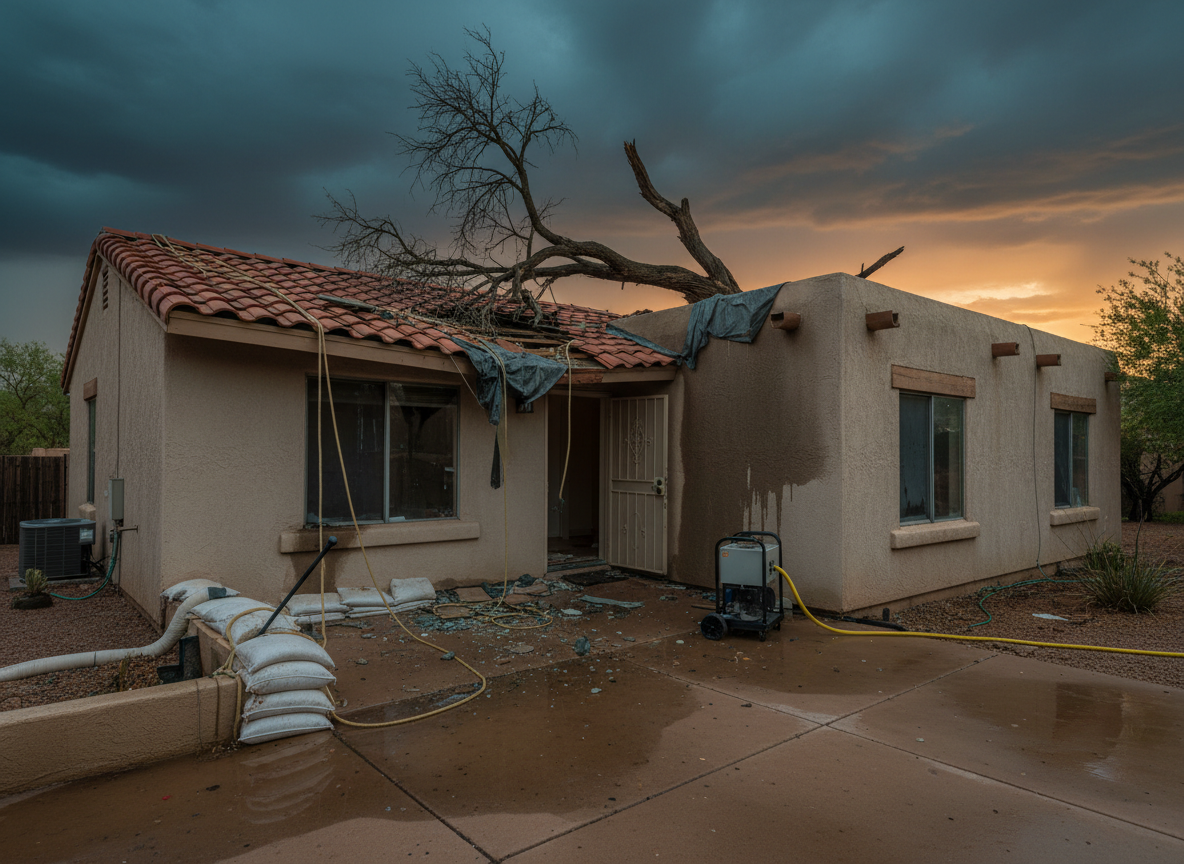
Scottsdale homes face monsoon-driven flash flooding each summer that can push water into foundations and walls within minutes of heavy downpours. Preparing roofs, grading, and drainage before the season starts reduces the chance that emergency water extraction becomes necessary after a single storm cell passes through Maricopa County.
How Monsoon Storms Hit Scottsdale Homes
Arizona monsoon patterns deliver 1 to 3 inches of rain in under an hour across the desert floor, overwhelming flat roofs and low-lying yards common in McCormick Ranch and Gainey Ranch. Homes near Camelback Mountain and the Scottsdale Waterfront often sit on compacted soil that sheds water quickly into streets and driveways, sending runoff against stucco walls and garage thresholds. Older stock in Old Town Scottsdale frequently lacks modern French drains, so water pools against slab edges and seeps into crawlspaces. These same storms also drop debris from desert washes into gutters, creating dams that force water under tile roofs within 30 minutes. Residents in nearby Paradise Valley and Tempe report similar patterns because the regional topography funnels runoff through the same arroyos that cross Scottsdale city limits.
Pre-Season Checks That Prevent Interior Water Entry
Walk the roofline in late May and clear every downspout and scupper before the first cell forms over the Superstition Mountains. Check that soil slopes away from the foundation at least 6 inches over 10 feet around the entire perimeter, a detail often missed on lots in Troon North where builders preserved natural desert contours. Install or verify splash blocks under every downspout so water lands at least 5 feet from stucco. In homes with attached garages, confirm the door threshold sits 2 inches above the driveway slab to block sheet flow during cloudbursts. These steps directly lower the volume of water that reaches interior finishes and reduce the need for water damage restoration later in the season.
Protecting Windows, Doors, and Landscaping During Active Storms
When a monsoon cell approaches, close and latch all impact-rated windows and sliding doors; even small gaps around older frames in South Scottsdale allow wind-driven rain to enter. Move potted plants and gravel mulch away from weep holes so water does not back up against the sill plate. If you have a pool, lower the water level 4 to 6 inches the day before forecast storms to prevent overflow into the yard. Keep a wet-dry vacuum and shop towels ready in the garage so you can pull standing water off the patio before it reaches the threshold. These immediate actions keep moisture out of drywall and flooring and limit the scope of any later storm damage cleanup.
What to Do If Water Crosses the Threshold
If water enters despite preparation, shut off power to affected rooms and document the entry point with photos before moving furniture. Remove standing water with a wet-dry vacuum within the first hour to slow wicking into baseboards. For larger volumes, contact a local team that offers emergency water extraction and water damage restoration so moisture does not remain trapped behind drywall for days. Homeowners in DC Ranch and Fountain Hills who followed this sequence after the July 2023 cells limited drywall removal to the lower 2 feet of affected walls instead of full-height replacement. Track the time water sat on the floor; every additional hour increases the risk of mold growth in the dry Scottsdale climate.
Long-Term Upgrades That Match Local Conditions
After the season ends, consider adding a 4-inch French drain along the uphill side of the lot on properties near Taliesin West where sheet flow from the desert is strongest. Replace original 20-year-old roof underlayment with synthetic material rated for 130 mph wind-driven rain, a common upgrade in Desert Mountain communities. Re-grade any settled soil around the foundation so the slope remains consistent after irrigation or settling. These targeted improvements address the specific runoff patterns created by the surrounding mountains and the intense but brief nature of monsoon rainfall in Maricopa County. For more immediate next steps after any event, review the guidance in What to Do in the First 24 Hours After Water Damage in Scottsdale.